

Two weeks in, and you’ve done the hardest part of sounding like yourself:
Week One → you swapped the textbook phrases for natural ones,
Week Two → you worked on being clear and easy to follow.
This week is the step most courses never get to. Because here’s the uncomfortable truth: you can say something perfectly correctly and watch it land with a soft thud. No reaction, no follow-up, and the conversation just carries on without you.
You’ll know the feeling. You make a good point in a meeting, and nothing happens. Then, ten minutes later, someone says almost exactly the same thing, and the room is suddenly nodding along. Same idea, completely different reception.
It’s enough to make you wonder what on earth is wrong with your English.
Here’s the reassuring part: usually, nothing is wrong!
The words were right, and the grammar was right.
What was missing had nothing to do with vocabulary → It was the shaping, the way the point was framed and delivered, and that, unlike some natural gift, is a skill you can learn.
Being correct and being compelling are two different things.
Correct is the floor, not the ceiling. It gets you understood.
Compelling gets you remembered, agreed with, and acted on.
For a lot of us, that gap is the last thing standing between good English and English that really works for us at work.
The good news is it doesn’t take bigger words. It takes better aim: knowing which part of your sentence to push, and how to frame it so the important bit stands out. Small changes, a real difference in how people respond.
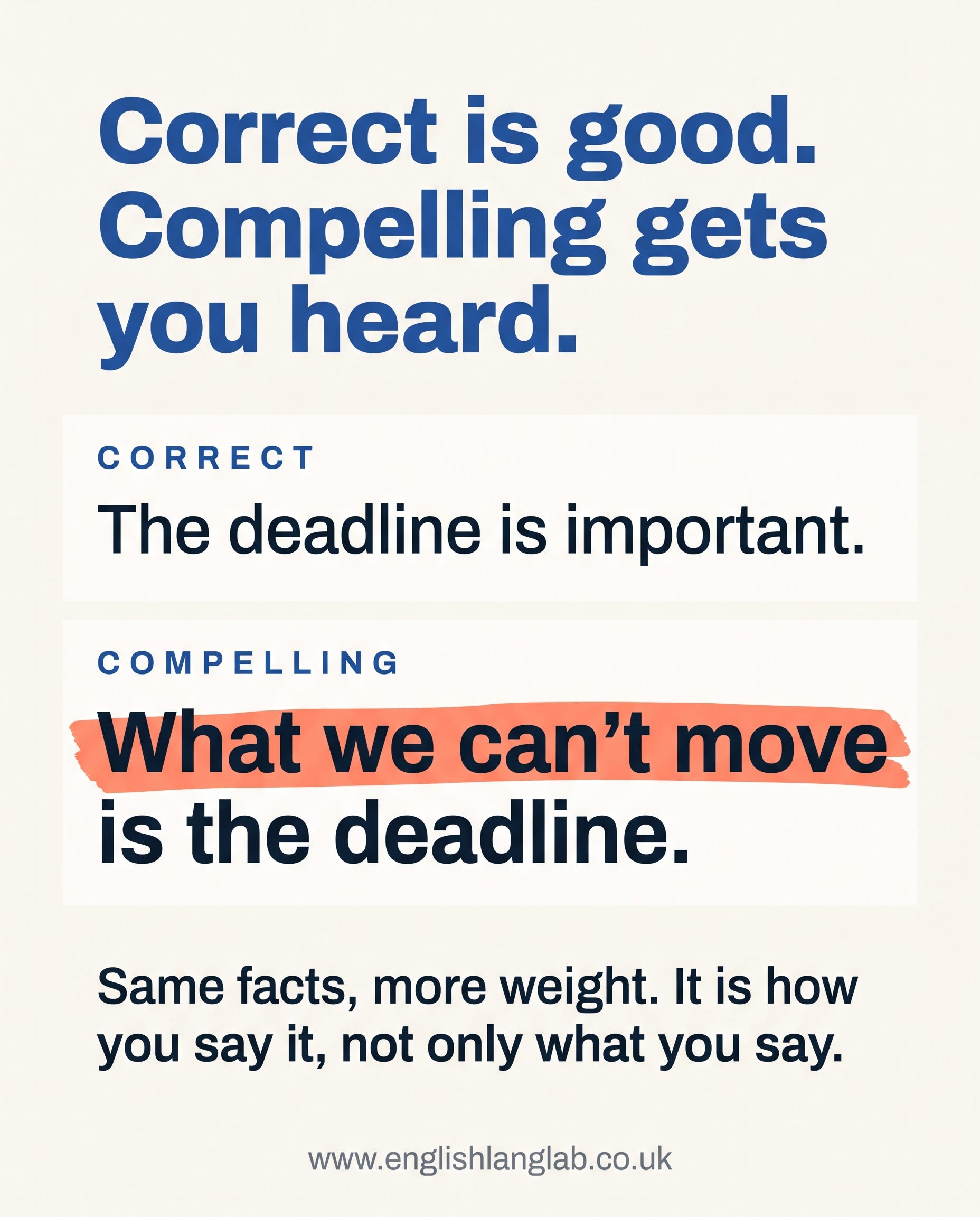
Here’s one to try...
In your next meeting, don’t only listen to what the confident people say. Listen to how they say it. Find the person who gets heard, and see if you can catch what they’re doing that you’re not. Half the skill is spotting it!
Your task this week
Take one flat, correct sentence you’d normally say, and rebuild it.
For example, turn “The deadline is important” into “What matters most here is the deadline.” Say the new version out loud, and use it once for real this week.
Let us know how you get on in the comments!
If you’d like to know more about the ‘how’ to do this, it’s just for members:
how to use emphasis, contrast, and cleft sentences to make a point actually stick.