

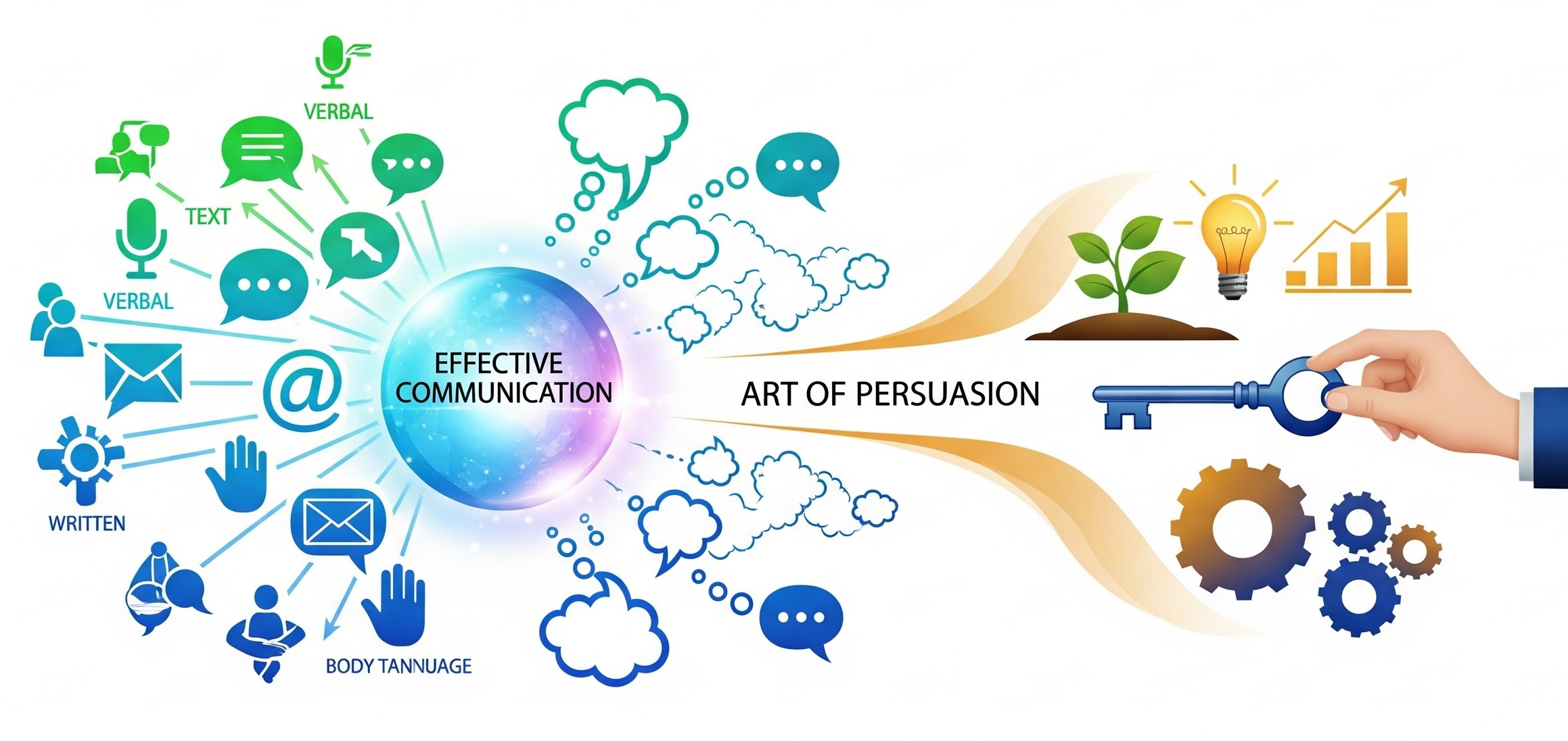
Explore the art of persuasion through language, tone, and grammatical structures like the subjunctive mood. Learn how to make your communication more effective and polite using specific phrases and hedging techniques.
Keywords
persuasion, language, grammar, subjunctive, communication, softening language, hedging, tone, influence, politeness
Key topics
The grammatical structure of ‘what if we were to’ and its use in persuasion
The importance of tone, body language, and delivery in effective communication
Using hedging words like ‘perhaps’ and ‘just’ to soften messages and increase persuasiveness
The role of politeness and formality in persuasive language
Examples of how to reframe direct proposals into indirect, persuasive questions
Takeaways
Using the phrase ‘what if we were to’ introduces a polite, hypothetical way to suggest ideas.
The subjunctive mood, especially ‘were,’ is more formal and courteous for proposing options.
Adding words like ‘perhaps’ or ‘just’ softens statements and makes them more persuasive.
Effective persuasion relies more on tone, body language, and delivery than on words alone.
Framing suggestions as questions makes others more receptive and open-minded.
Sound bites
“Questions are more open than direct statements.”
“Adding ‘perhaps’ softens bold statements.”
“Hedging makes others feel it was their idea.”
Chapters
00:00 Introduction to the Art of Persuasion
05:04 Understanding the Subjunctive Mood
09:48 The Power of Persuasive Language


