

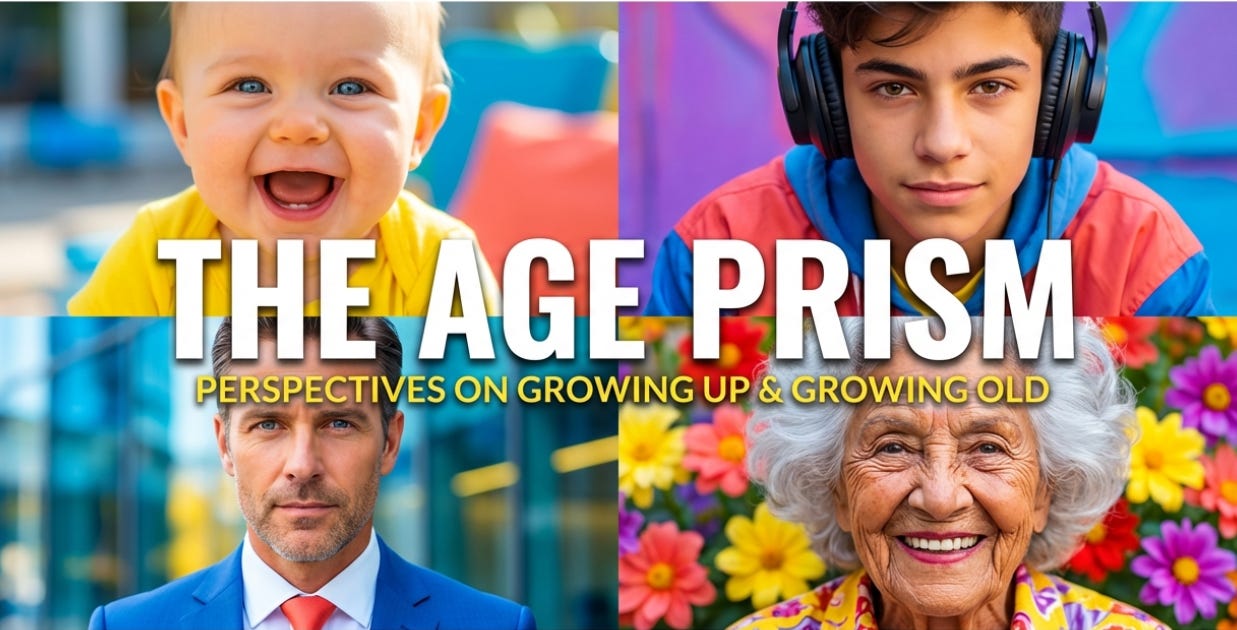
In this month’s class, we spoke about lessons learned on longevity and living well.
Think about it…
Have you ever felt completely young in your mind, only to be surprised by your reflection?
We often feel “young at heart,” but our bodies eventually tell a different story.
One student shared a moment we can all relate to.
He said that while he feels young, when he looks in the mirror, he sees his father. This “Father in the Mirror” moment happens to many of us as we notice aching bones or need new glasses. It makes us wonder: why do some people age better than others?

So… is there a secret to living a long, healthy life?
Researchers have found special places called “Blue Zones” where people live much longer than average. These hotspots include Sardinia (Italy), Okinawa (Japan), and Nicoya (Costa Rica).

According to research, long life depends on three main pillars:
A Local Whole Foods Diet: Eating fresh, natural meals.
Rich Social Interactions: Having strong friendships and family ties.
Low Stress and Constant Activity: Moving naturally throughout the day.
“They live in locations where they’ve got to walk up the hill, down the hill... it’s not all on the same level.”
However, there is a surprising debate about these zones. Some experts suggest that the data might be wrong because of poor record-keeping from the 1900s. There are even stories of fraud.
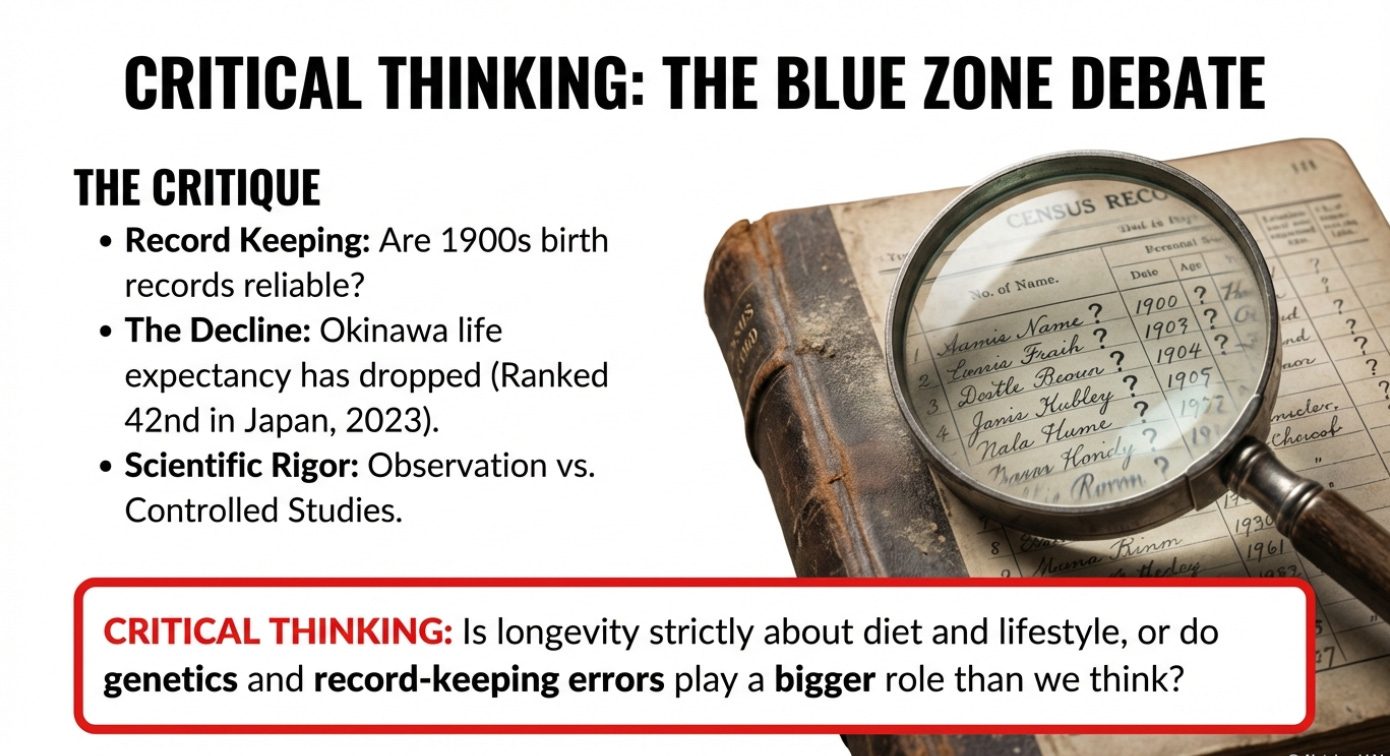
For example, one student mentioned a story about some Chinese immigrants who replaced deceased relatives to keep receiving their pension benefits.
Even in Okinawa, life expectancy is dropping. This is likely because of “Ultra-Processed Foods” (UPF). A good rule to follow is the six-ingredient rule: if a food has more than six ingredients or things you do not recognise, you should probably avoid it.
Simple activities are the best anti-ageing strategies. Whether it is yoga, swimming, or a love for horse riding and dance, staying mobile is the key.
“I go to a gym twice a week... It’s my anti-aging strategy. [Walking] is one of the main keys to get old in a sound manner.”
Social habits also matter.
Many find it hard to avoid alcohol at parties, but you can use the “Des” (Designated Driver) strategy. One student shared how she used this with her daughter. By offering to drive, her daughter felt “cool” and had a polite reason not to drink without feeling left out.
Plus, technology is changing how we interact across generations.
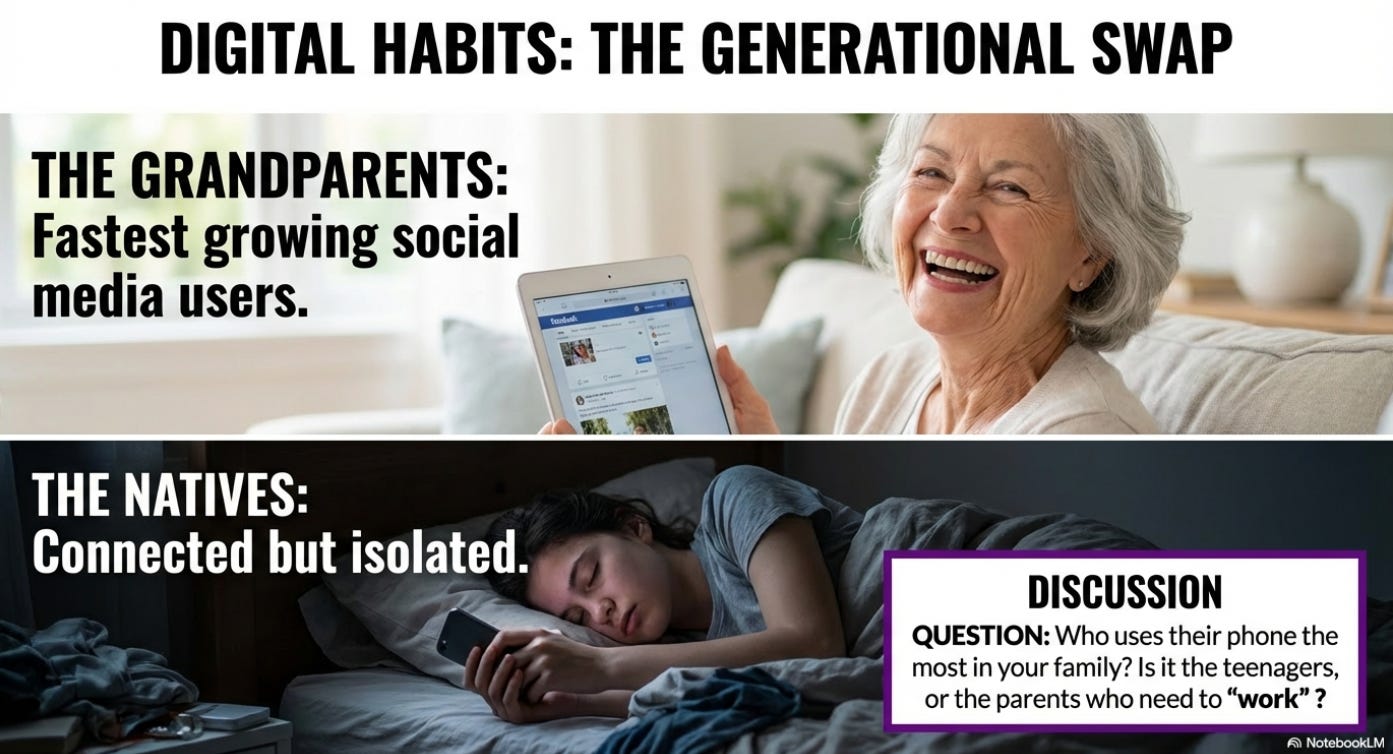
Interestingly, grandparents are the fastest-growing group on social media. They use Facebook to find old friends and plan real-life meetings. Meanwhile, younger people often “doomscroll” on TikTok, which can be superficial and stressful.
Digital habits start early. There was even a story of a three-year-old toddler trying to “scroll” a real window with their fingers to see something better! This shows how much devices are changing our brains.
The data on reading habits is also shocking:
Millennials: 80% have read a book in the last year.
Gen Z: They spend an average of only 7 to 8 minutes per day reading.
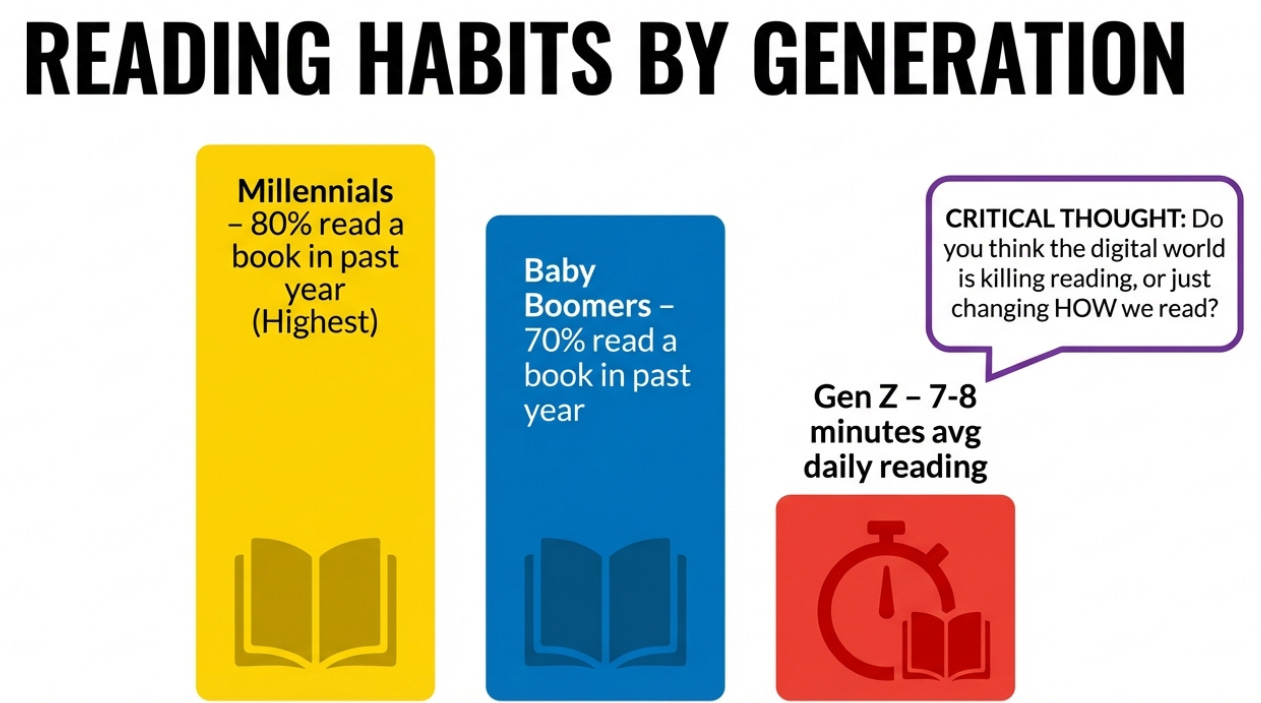
Is the digital world killing reading? Perhaps not. Many people are simply switching to audiobooks or reading news on their phones.
Then we spoke about how different cultures view ageing in very different ways:
Western View: Focuses on independence and being able to do things alone.
Italian View: Values physical closeness (hugging and touching).
Eastern View: Focuses on filial piety, which is the duty to respect your parents and elders.
“We eat very, very often together... three, four, five times a week.”
However, respect does not always mean warmth.
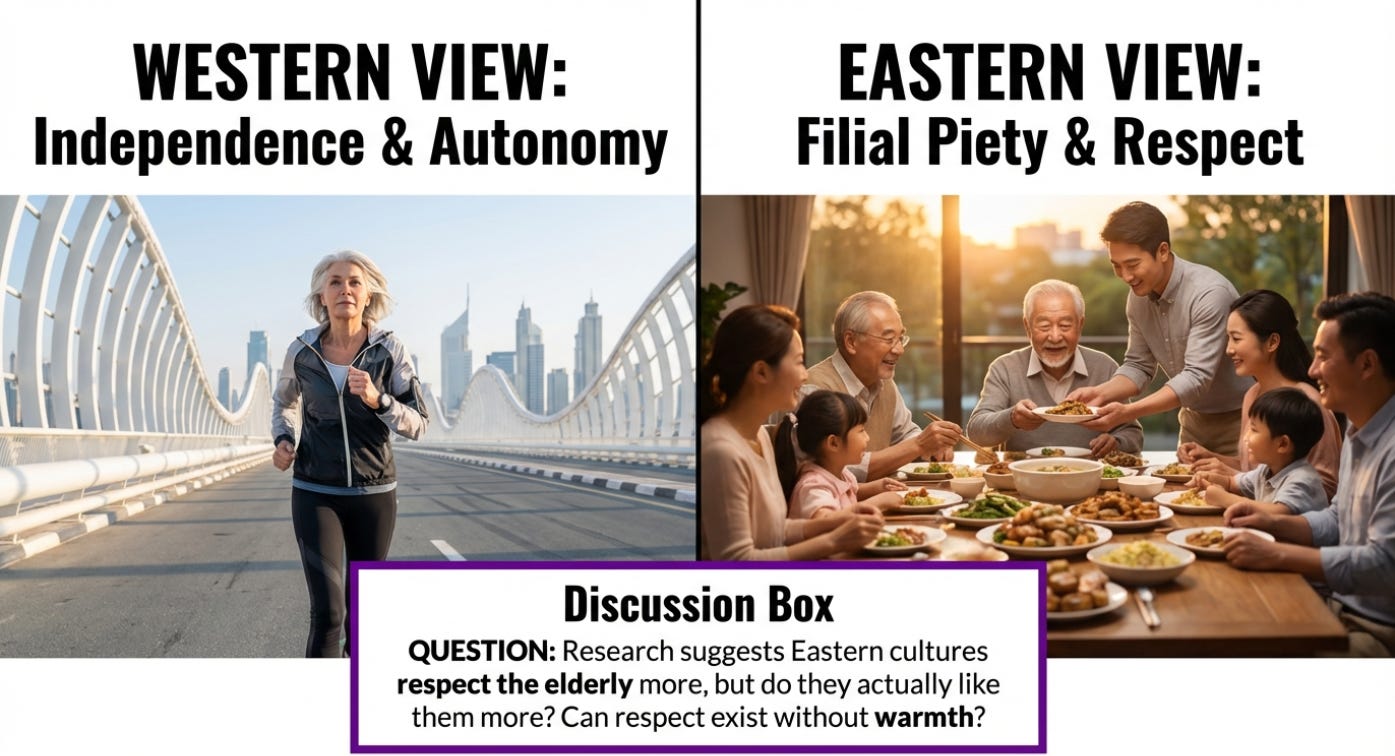
One student noted that in Eastern cultures, elders are treated very formally (like being called “Sir”), but there is often a lack of hugging or kissing. Also, this respect is often directed more toward men in patriarchal societies. This student went on to share that his mother deeply needs physical contact, like a kiss or holding hands, to make her happy.
In modern offices, respect should go both ways. Older workers have “all the wisdom,” while younger workers have the latest tech skills.
But how do you tell an older colleague their method is old-fashioned?
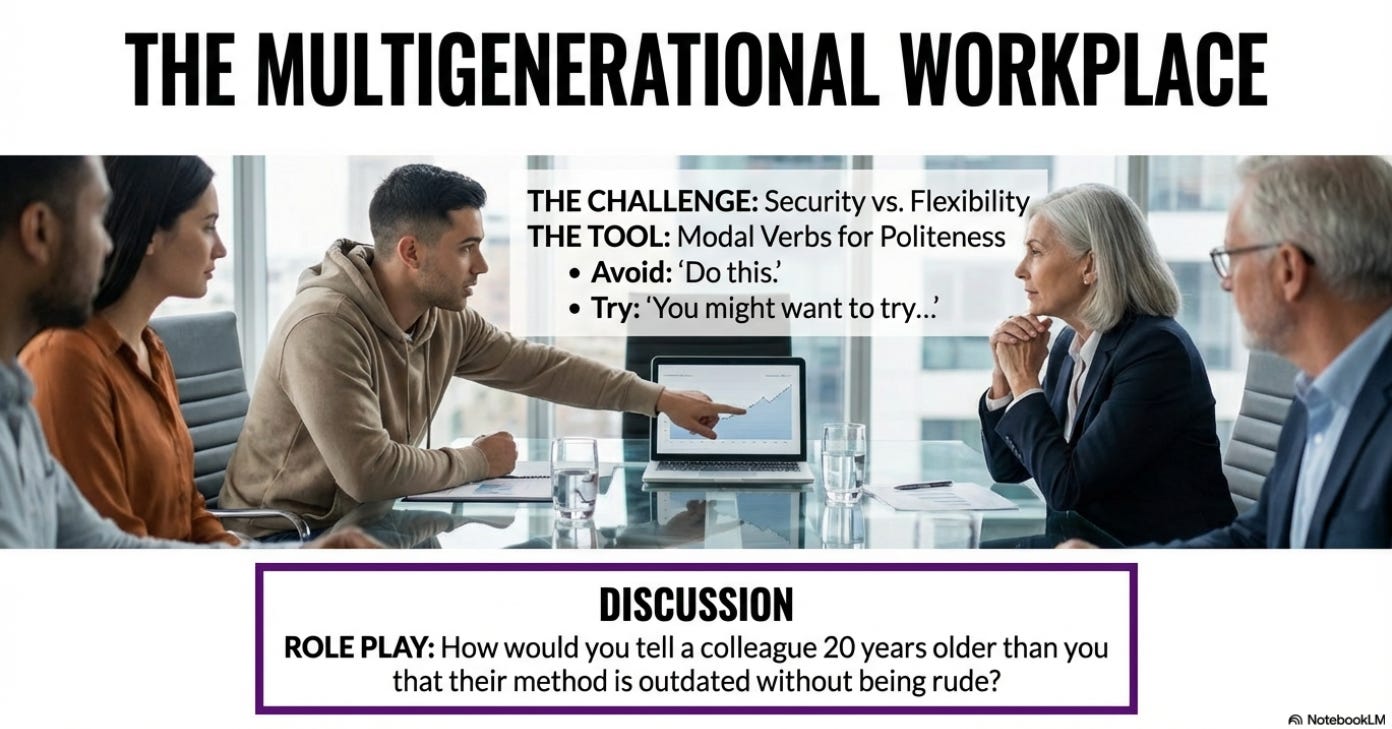
One student suggested being direct but professional. He recommended saying: “Your approach is a bit outdated.” While this sounds strong, it is honest.
Another student agreed, saying she would rather be told the truth than “humiliate” herself by using a method that no longer works.
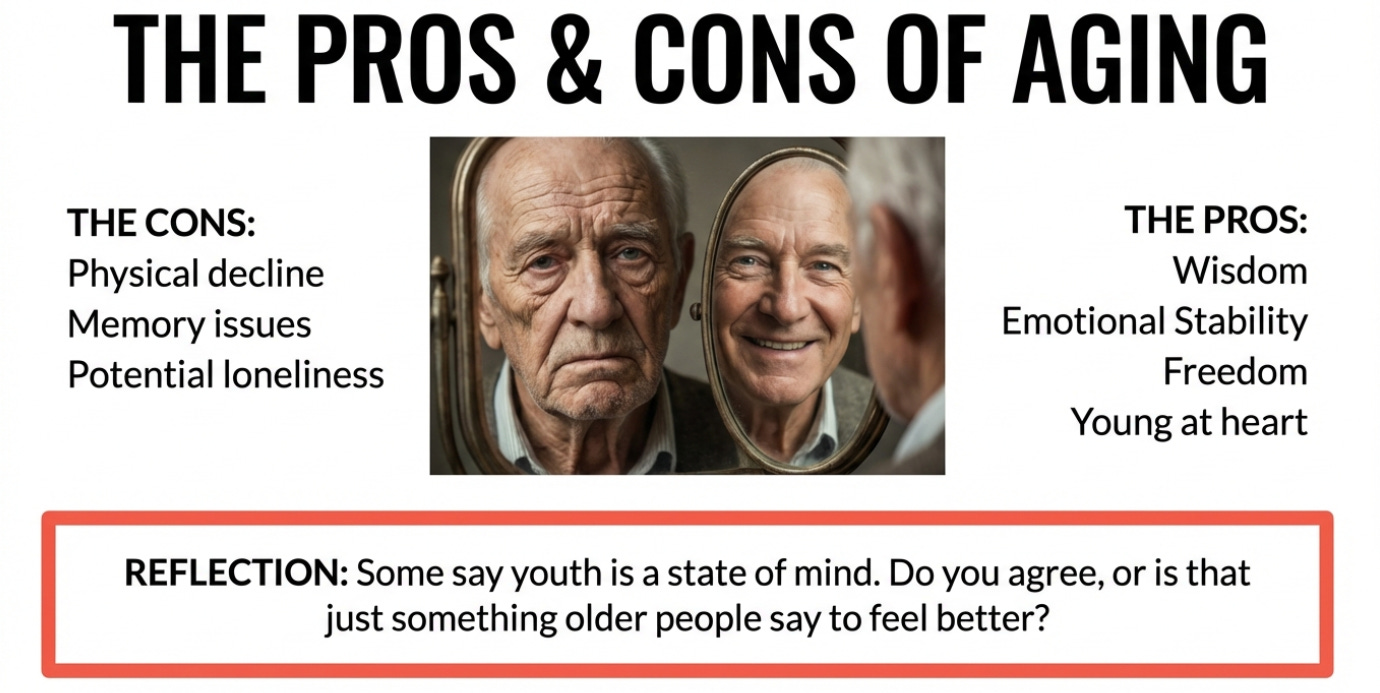
Ageing has real physical “cons.”
Some of us see our teeth as a “construction site” because of the high cost of implants.
We also face tinnitus (ringing in the ears) and the need for many pairs of glasses.
Society also sets rules, such as driving tests for the elderly or mandatory retirement at age 65.
However, there is a “pro” to getting older: liberation. As we age, we stop caring so much about what other people think of us.

Ultimately, the key is to stay young at heart.
What is the “ideal” age to be, and are you already there?
Looking to practice your English in a friendly, interactive environment?
📅 February Schedule
Join us for these two 60-minute online sessions:
Grammar Drop-in: Wednesday Feb 4th at 18:00 CET
Group Conversation Class: Saturday Feb 21st at 09:30 CET
Why Join?
Guided by Rachel, an experienced English teacher, these sessions offer a supportive space to tackle new topics and challenges every month.
Level: Intermediate +
Frequency: Recurring monthly events—giving you consistent practice to improve and connect with our global community.
💡 How to Access
These sessions are included as a monthly benefit for our MEMBERS (paid subscribers).
Yes, 2 x 60-minute classes EVERY MONTH as part of your membership!
Already a MEMBER?
Simply send us a message right now, or an email, to let us know you’re coming, and we’ll send you the joining link for the sessions!
Currently a FOLLOWER?
If you are a free subscriber, now is the perfect time to upgrade your subscription. Don’t miss out on these live sessions—become a member today to reserve your spot! They happen EVERY MONTH and are included in your membership at no extra cost!
Want a Single Session Ticket?
If you can’t commit to a membership but want to join us for a specific date, you can book a one-off spot via our booking page. The price is €15 per session.
Note: Please ensure you can come before booking. There are no refunds if you do not attend.