

A colleague suggests lunch. “There’s a lovely gastropub near the office,” they say. Someone else pulls a face and says, “Or we could just go to the caff.” You nod along, but you’re not quite sure what the difference is, or what you’ve just agreed to.
The name of the place matters as much as the food. In Britain, where you eat sends a quiet message about how much you’ll spend, how smart you should look, and how formal the occasion is. Native speakers read these signals without thinking. Learners often can’t, and that’s how you end up suggesting a greasy spoon for an important client, or turning up overdressed for a sandwich.
So, roughly from cheapest to smartest, here’s what the names mean.
The greasy spoon, or “the caff”
A greasy spoon is a small, cheap, informal café. The name comes from the fried food: a full English breakfast, bacon rolls, egg and chips, and mugs of strong tea (sometimes called “builders’ tea”). People often shorten café to “caff”, and a caff usually means this kind of place, not a smart coffee shop.
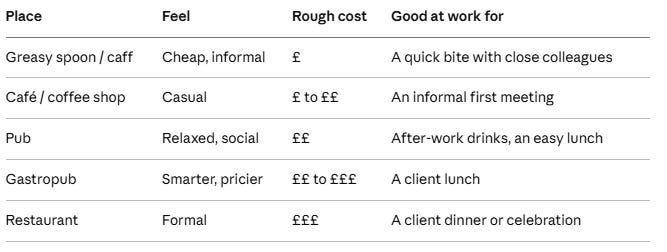
The signal: cheap, friendly, no fuss, often cash only. Good for a quick, relaxed bite with colleagues you know well. Not where you take a client you’re trying to impress.
The coffee shop or café
Broader than a caff. This covers independent cafés and chains like Pret or Costa. Coffee, tea, sandwiches, cake, and a light lunch.
The signal: casual and safe. Fine for an informal meeting, a first coffee with someone new, or a chat that isn’t quite a full meal.
The pub
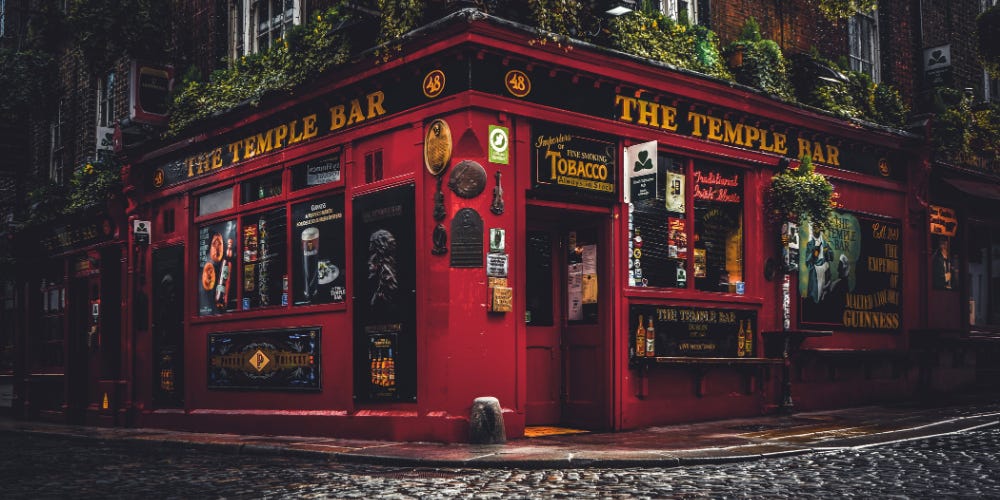
A pub, short for “public house” and sometimes called “the local” or, informally, “the boozer”, is built around drinks, but most serve food too. That food is often called “pub grub”: burgers, fish and chips, and a Sunday roast.
The signal: relaxed and social. This is the classic place for a drink after work, and a comfortable middle ground for a working lunch that isn’t stiff.
The gastropub
A gastropub is a pub that takes its food seriously. The surroundings still feel like a pub, but the menu is more ambitious and the prices are higher.
The signal: relaxed but not cheap, and a step up in class. A good choice when you want somewhere pleasant and a bit special, without the formality of a restaurant. This is often the safe pick for a client lunch.
The restaurant
The formal end. You book a table, you sit down for a proper meal in courses, and you dress a little smarter.
The signal: this is an occasion. Right for a client dinner, a celebration, or an important meeting over food. It also usually costs the most.
A few others worth knowing: a chippy is a fish and chip shop you take away from, a takeaway is any place you order food to eat at home, and a canteen is the basic self-service place inside an office or building.
Quick guide
The grammar bit: naming the outing by the food…
Here’s a very British habit. Instead of naming the place, people often name the whole outing by what they’ll eat or drink, using “go for a” or “fancy a”.
