


Phrasal verbs can be one of the hardest parts of learning English. These are phrases made up of a verb and one or more small words (called particles) that often have meanings you can’t easily guess.
For example, phrases like "pick up," "run into," and "put off" are very common for native English speakers, but they can confuse even advanced learners.
This leads to an important question: Do you need to learn phrasal verbs?
- The answer depends on your goals and how you use English in your life.
Are Phrasal Verbs Essential for Communication?
If you mostly speak English with other non-native speakers, learning phrasal verbs might not be so important. Many non-native speakers use simple and clear words instead of phrasal verbs.
For example:
Instead of saying "put off" (meaning postpone), they might say "delay."
Instead of saying "run into" (meaning meet by chance), they might just say "meet."
This is because non-native speakers usually want to make sure their meaning is clear and easy to understand. They don’t use phrasal verbs often because they can cause confusion.
Even if you know a phrasal verb and use it, the person you’re talking to might not understand it. In these situations, avoiding phrasal verbs can make your English clearer and easier to understand.
When Are Phrasal Verbs Useful?
Phrasal verbs are much more useful if:
You talk to native English speakers often.
You watch English movies, TV shows, or read books.
Native speakers use phrasal verbs all the time, often without thinking about it. If you want to understand them or sound more natural when speaking, phrasal verbs are very helpful.
But here’s the thing: there are thousands of phrasal verbs in English!
A Smarter Way to Learn Phrasal Verbs
The best way to learn phrasal verbs is to focus on the ones that are useful to you. Learn them in a way that makes sense for your life. Here are three simple strategies:
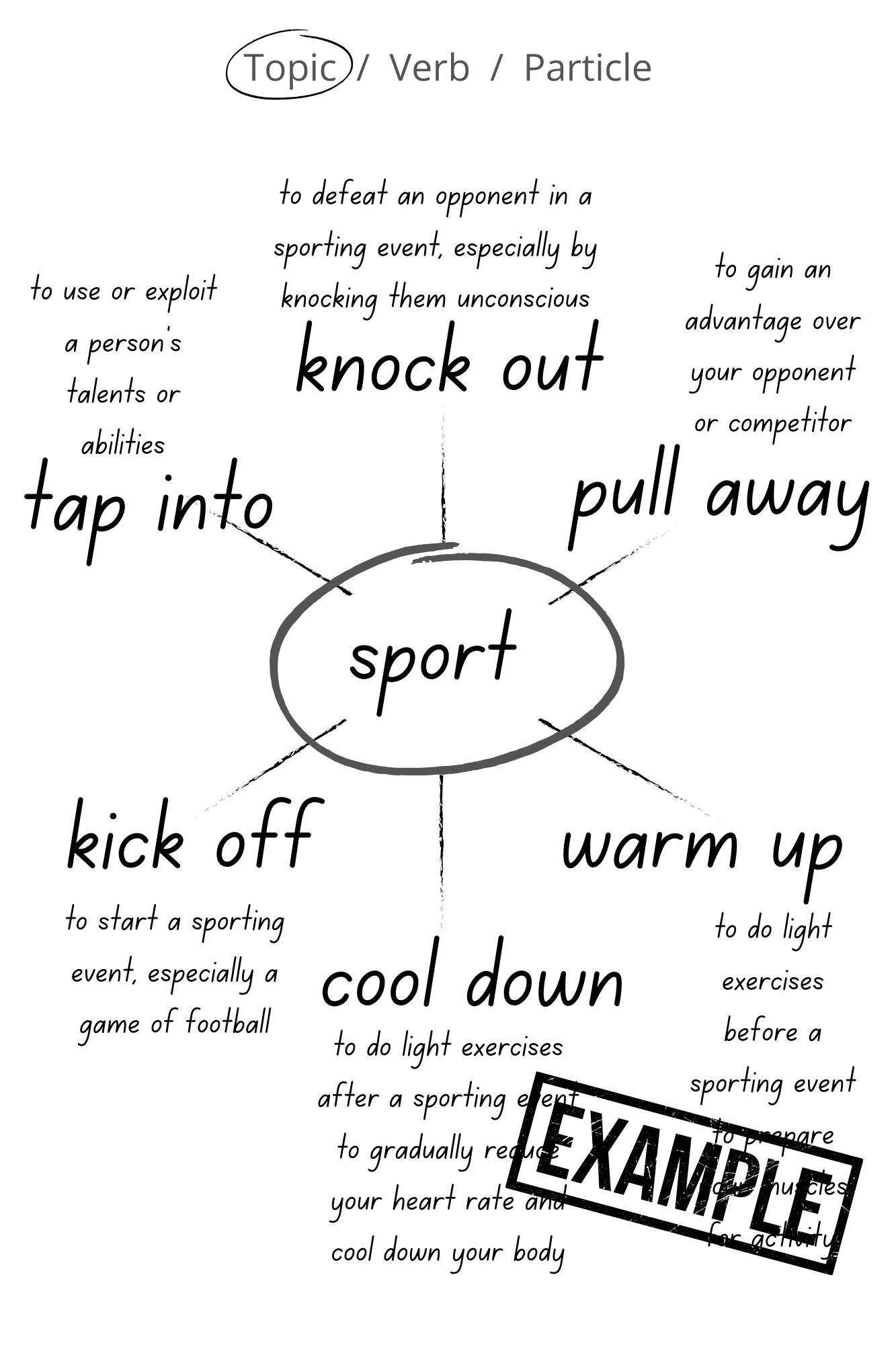
Learn by Topic:
Group phrasal verbs based on a specific topic. For example:Work-related phrasal verbs: "follow up" (check on something), "hand in" (submit), "set up" (arrange).
Travel-related phrasal verbs: "check in," "take off," "pick up."
Learn by Main Verb:
Look at phrasal verbs that use the same main verb. For example:"get out," "get over," "get by," "get along."
This helps you understand how the meaning changes with different particles.
Learn by Particle:
Focus on phrasal verbs that share the same particle. For example:"up" in "pick up," "give up," "wrap up."
This can help you see patterns and remember meanings more easily.
The Importance of Practice
Once you’ve chosen which phrasal verbs to learn, the next step is to practice using them. It’s not enough to just understand the meaning—you need to use them in sentences and conversations. Try writing them down, saying them out loud, or using them in real-life situations. With practice, you’ll remember them better and feel more confident using them.
Your Solution: Two Books to Master Phrasal Verbs

To make mastering phrasal verbs simpler and more effective, I’ve created two books designed to work together:
1️⃣ How to Learn, Remember, and Use Phrasal Verbs
A practical guide that teaches you step-by-step how to understand, organize, and use phrasal verbs confidently.
2️⃣ Phrasal Verbs Learning Notebook
A customizable workbook where you can collect, organize, and practice the phrasal verbs that matter most to you.
🎯 Why These Books Work Together:
✅ Learn how to tackle phrasal verbs in real-life situations.
✅ Build a personalized resource for long-term learning.
✅ Perfect for students, teachers, and independent learners.
Remember…
Learning phrasal verbs isn’t mandatory for every English learner. However, if you want to communicate effectively with native speakers or understand English media, they’re a valuable tool. Use a targeted approach to focus on the ones you’ll find most useful, practice them regularly, and watch your confidence grow.
#LearnEnglish #PhrasalVerbs #LanguageLearning #SelfStudy