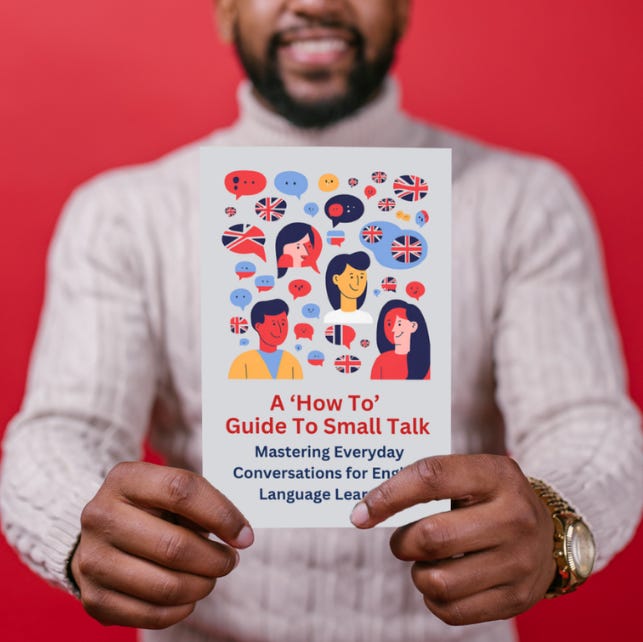
Let’s talk small today…. small talk… but it’s not SMALL, it’s a BIG skill to master!
Small talk is like a friendly hello in a conversation. It's not about big ideas, but about easy topics like the weather, your day, or a shared experience.
Why is it important?
Connect with people: It helps you make friends and build relationships.
Practice English: It's a low-pressure way to use your English skills.
Feel comfortable: It makes social situations less awkward.
Learn about culture: You can learn about how people interact in English-speaking countries.
So, don't worry about saying anything perfect. Just relax and talk!


It's true that knowing what to talk about is a key part of mastering small talk.
Here are some good, generally safe, and engaging topics:
The Weather:
"It's a beautiful day, isn't it?"
"Are you enjoying this weather?"
This is a classic for a reason – everyone experiences it!
Current Events (Light):
"Did you see that news about...?" (Keep it positive or neutral)
Focus on events that are not too controversial.
Food and Drink:
"Have you tried the coffee here? It's great."
"Do you have a favourite restaurant around here?"
"What kind of food do you like?"
Travel:
"Have you travelled much?"
"Do you like to travel?"
"Have you visited this city before?"
Hobbies and Interests:
"What do you like to do in your free time?"
"Do you have any hobbies?"
This can open up more personal and interesting conversations.
Entertainment:
"Have you seen any good movies or shows lately?"
"Do you like music?"
"Do you like to read books?"
Local Events:
"Have you heard about the festival this weekend?"
"Do you know of any good places to see around here?"
Tips for Choosing Topics:
Keep it Light: Small talk is not the place for deep or controversial discussions.
Be Observant: Pay attention to your surroundings. If you're at an art gallery, talk about the art. If you're at a coffee shop, talk about the coffee.
Ask Open-Ended Questions: These questions encourage more than a "yes" or "no" answer.
Listen Actively: Show genuine interest in what the other person is saying.
Find Common Ground: Look for shared interests or experiences.
Be Respectful: Be mindful of cultural differences and avoid sensitive topics.


It's just as important to know what not to talk about in small talk, especially when you're learning a new language and navigating cultural nuances.
Here are some ‘taboo’ topics to avoid:
Politics:
Political views can be very sensitive and personal. It's best to steer clear of these conversations, especially with people you don't know well.
Religion:
Similar to politics, religious beliefs are deeply personal and can lead to disagreements.
Personal Finances:
Questions about someone's salary, debt, or financial situation are considered rude and intrusive.
Health Problems:
Discussing serious illnesses or medical conditions is generally inappropriate in casual conversation.
Gossip:
Spreading rumours or talking negatively about others is never a good idea. It can damage your reputation and create awkwardness.
Age:
Asking someone's age, especially a woman's, can be considered impolite.
Weight and Physical Appearance:
Commenting on someone's weight or appearance, even with good intentions, can be offensive.
Controversial Current Events (Heavy):
While light current events can be okay, avoid topics that are heavily debated, or that bring up emotional responses.
Personal Problems:
Small talk is for light and positive conversation, not for sharing your deepest worries.
Anything that could be seen as discriminatory:
Avoid any comments related to race, ethnicity, sexual orientation, or any other topic that could be perceived as prejudice.
Why These Topics Are Taboo:
Privacy: Many of these topics are considered private and personal.
Respect: Asking about them can be seen as disrespectful and intrusive.
Potential for Conflict: These topics often lead to disagreements and arguments.
Cultural Sensitivity: Different cultures have different norms, but these topics are generally considered off-limits in most English-speaking countries.
Awkwardness: These subjects can create very uncomfortable situations.
Instead of these topics:
Focus on positive and neutral subjects.
Ask open-ended questions about hobbies, interests, or experiences.
Listen attentively and show genuine interest in the other person.


You might also want to watch this video to help you…
If you want to learn more then why not get the book…