

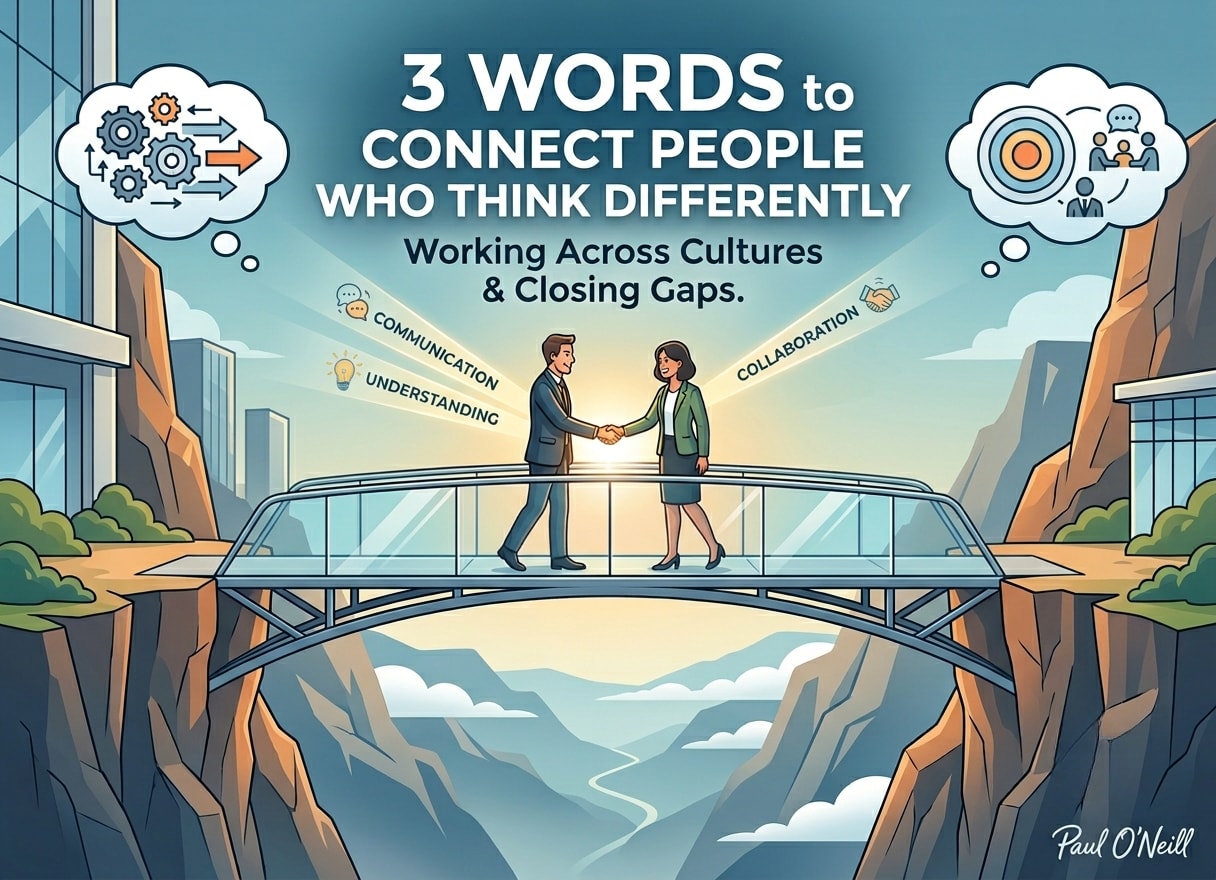
You’re on a video call with colleagues from four different countries. Everyone speaks English, but somehow you’re not all speaking the same language.
The German colleague is direct and wants a decision now. The Japanese colleague needs more time to consult their team. The Brazilian colleague wants to build a relationship before talking numbers. And you’re somewhere in the middle, trying to make the meeting work.
The words are all in English. But the gaps between you have nothing to do with vocabulary.
So how do you fix this?
This week’s expression gives you the answer: “to bridge the gap.”
What does it mean?
To bridge the gap means to reduce or eliminate a difference between two things, two people, or two groups.
The “gap” is a distance. It could be a difference in understanding, in culture, in experience, in age, or in expectations. The “bridge” is what you build to connect the two sides.
When you bridge a gap, you’re not pretending the difference doesn’t exist. You’re finding a way to connect across it.
Picture this
Imagine two cliffs with a deep valley between them. On one cliff stands your idea. On the other stands someone else’s way of thinking.
You could shout across the valley. You might be heard, but the message gets lost in the distance.
Or you could build a bridge. Something solid that lets both sides walk across, meet in the middle, and actually understand each other.
That bridge could be a question you ask, an effort to understand their perspective, or the way you adapt your communication style. Every time you do that, you’re bridging the gap.
Want to see how native speakers use this in real life, learn a special grammar tip, and practice your English with me? 👇
Upgrade your subscription below to unlock the rest of this lesson and all premium content!🔒
