



In this episode of Bispod, we discuss the significance of communication frameworks in various contexts, particularly in job interviews. We emphasise how frameworks can enhance clarity and confidence in communication, making it easier to convey messages effectively. The conversation covers specific frameworks like PPF (Past, Present, Future) and STAR, illustrating their application in interviews and everyday communication. We encourage listeners to adopt these frameworks to improve their English skills and overall communication effectiveness.
Keywords
communication, frameworks, job interviews, English skills, presentation skills, STAR method, PPF framework, effective communication
Takeaways
Frameworks are essential for effective communication.
Winging it in meetings is not a good strategy.
Communication frameworks act as a safety net for your brain.
Following a framework allows you to focus on your message.
The PPF framework helps structure responses in interviews.
The STAR framework is widely used in tech interviews.
Using the Magic of Three enhances communication impact.
Frameworks can help showcase grammar effectively.
Preparation with frameworks boosts confidence in speaking.
Knowing frameworks equips you for unexpected questions.
Sound Bites
“Winging it is a bad strategy.”
“PPF: Past, Present, Future framework.”
Chapters
00:00 The Importance of Frameworks in Communication
04:02 Applying Frameworks in Job Interviews
09:55 Exploring Various Communication Frameworks
Two books, one goal: say it better at work
A client once told me she’d rehearsed a two-minute update for her manager all weekend. On Monday, thirty seconds in, she lost her thread. Her English was fine. Her vocabulary was fine. So what went wrong?
She had the words. She didn’t have a structure.
That’s the idea behind both of my books.
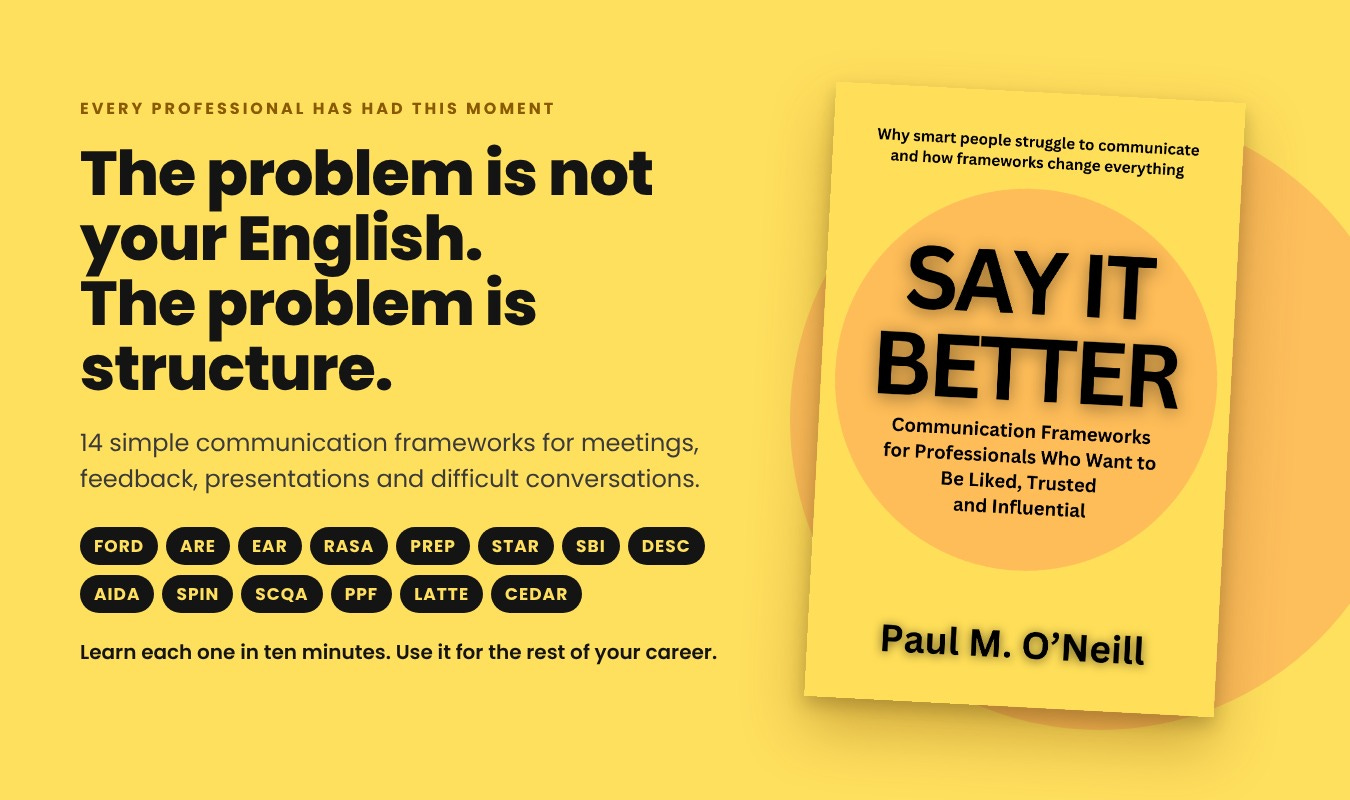
Say It Better
Communication Frameworks for Professionals Who Want to Be Liked, Trusted and Influential
This is the foundation. Inside you’ll find 14 simple, practical communication frameworks: short structures you can use to give updates, make your point, handle difficult conversations, persuade and connect. Each one is explained clearly, with real workplace examples, so you know exactly when to use it and why it works.
It’s for anyone who wants to sound clear and confident at work, whether English is your first language or your second.
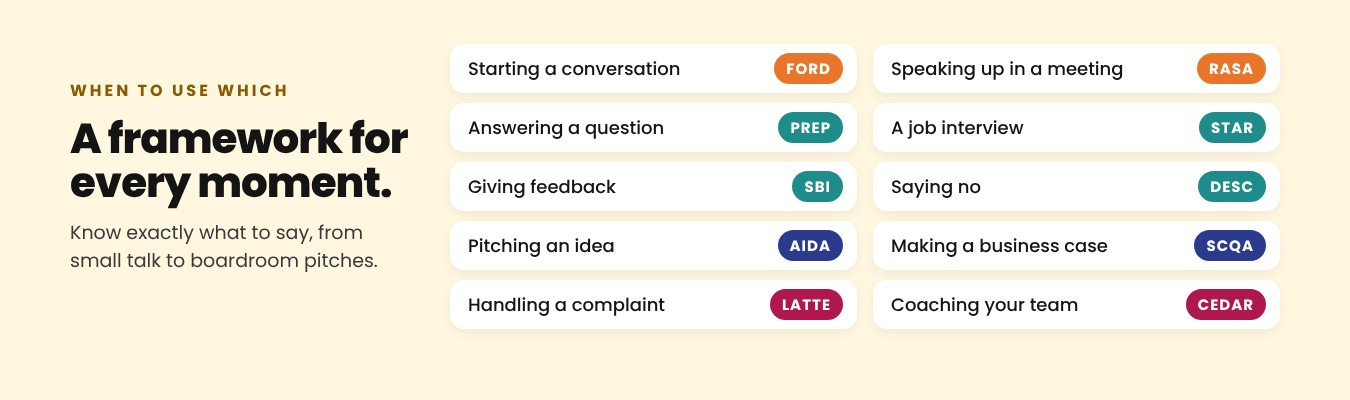
Find out more: www.sayitbetter.info
👉 Get it here: https://mybook.to/SayBetter
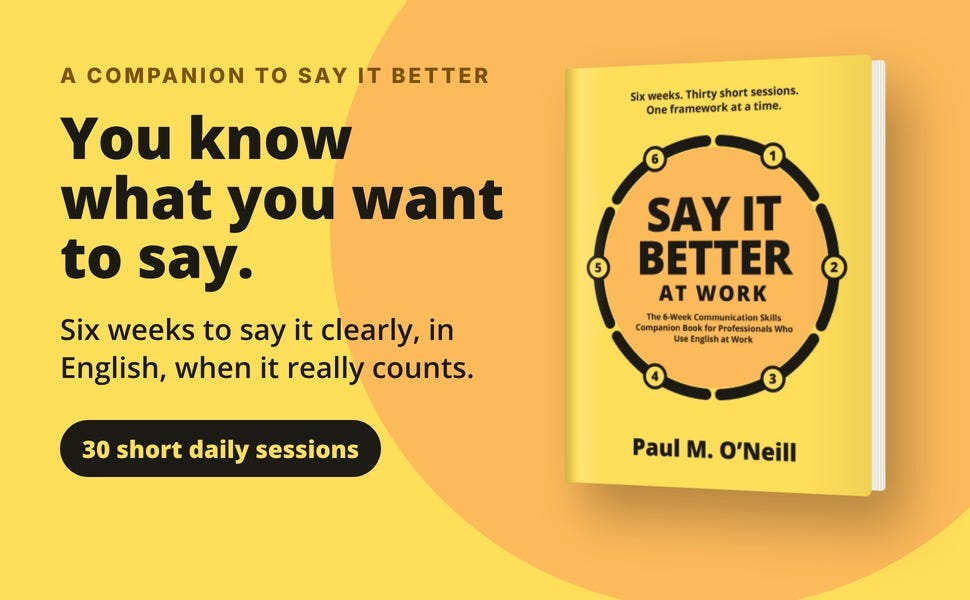
Say It Better at Work
The 6-Week Communication Skills Companion Book for Professionals Who Use English at Work
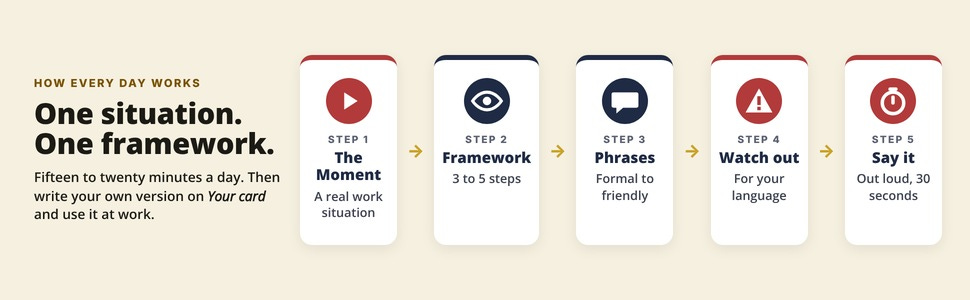
This is where you put the frameworks into practice. It’s a large-format, scenario-led companion book with a six-week plan, so you build the habit step by step instead of reading and forgetting.
Inside you’ll find:
All 14 frameworks from Say It Better, practised through brand-new workplace stories and scenarios
A section on other useful frameworks beyond the first book
Phrase banks to help you find the right words quickly
Watch-out boxes for Italian, German, French and Spanish speakers, covering the mistakes that often catch them out
Free audio, so you can hear the dialogues and practise your listening and speaking
It’s written for upper-intermediate to advanced learners, and for native speakers who want a practical way to sharpen their communication.
Find out more: www.sayitbetter.info/at-work
👉 Get it here: https://mybook.to/SIBAtWork
Which one should you start with?
Read Say It Better to understand the frameworks. Work through Say It Better at Work to make them automatic. Together, they take you from “I know what I want to say” to “I said it, and they listened.”
And my client? Two frameworks later, her Monday updates take ninety seconds, and her manager now asks her to brief the team.


