


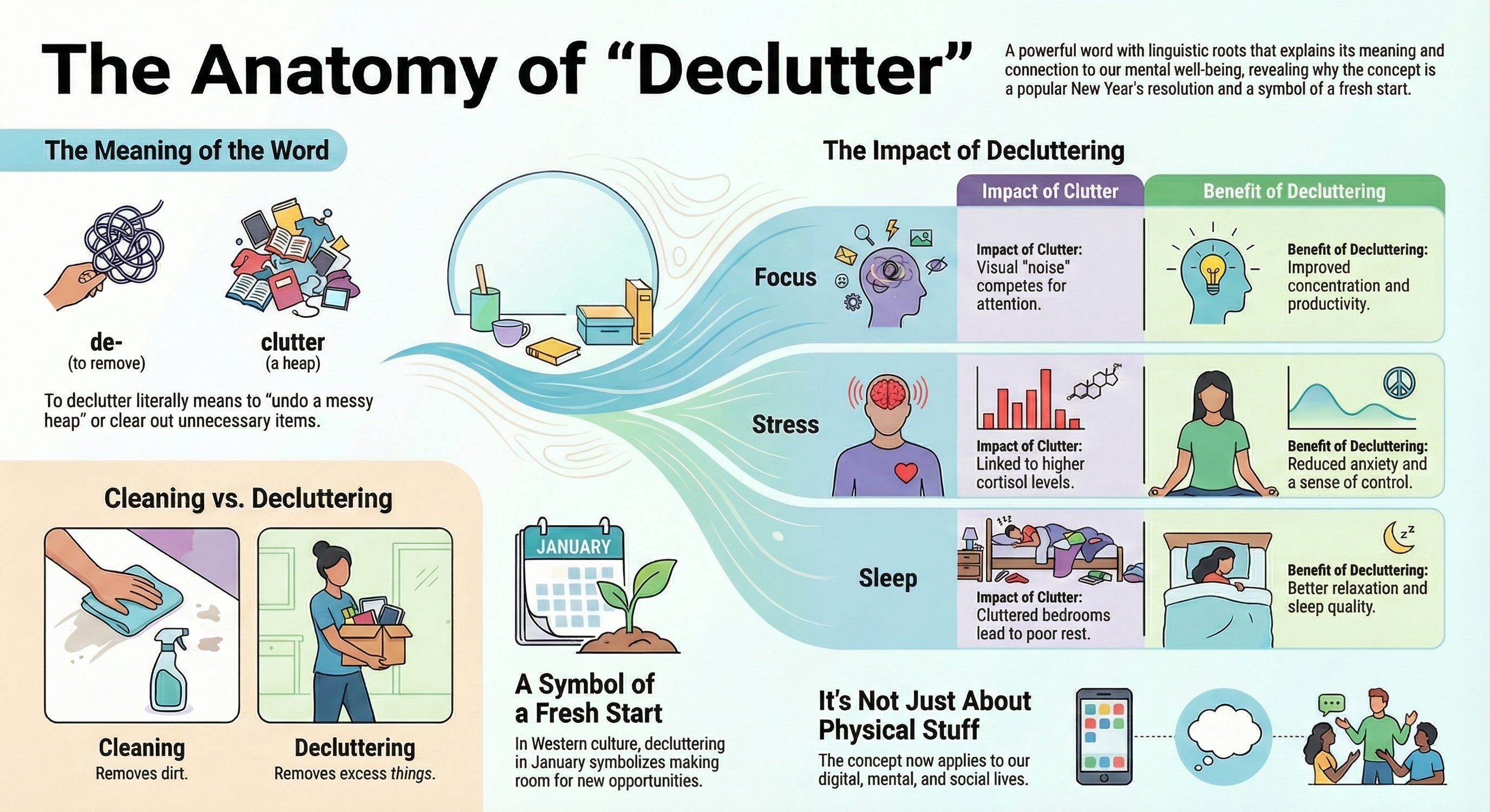
If you see a messy desk or a full email inbox and feel tired, you are not alone. This guide will explain why decluttering, the simple act of tidying up, can make you feel much better.
It might sound like a new, modern word, but the idea is very powerful. We will look at what it is, where the word comes from, and why it is more important than just cleaning
The Simple Meaning of ‘Declutter’
To understand “to declutter,” let’s look at the two parts of the word.
The Root Word - “Clutter”: This old English word means “to pile up in a messy way.” Think of it as a big, messy pile of things that stops things from moving or working easily.
Adding “De-”: This is a useful part of a word that means “to remove” or “to undo,” like in the words decode (to undo a code) or deice (to remove ice).
When we put them together, “to declutter” simply means “to undo the mess.” It means taking away the things you do not need.
This simple meaning shows that decluttering is different from everyday cleaning.
Decluttering vs. Cleaning: What is the Real Difference?
Cleaning is about keeping your space nice. It removes dirt, dust, and germs (like scrubbing floors or washing windows).
Decluttering is about getting your space back. It removes things you don’t use anymore (like donating, throwing away, or putting things in a better place).

